3x the density
Built for AI racks of 120 to 140 kW, liquid cooled, three times a conventional air-cooled rack.

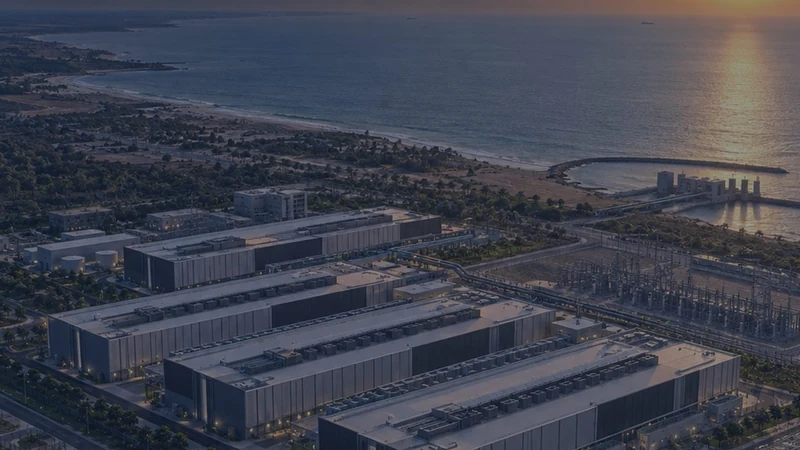
What does it take to build a 100 MW AI data centre?
And a consortium to deliver it.
The proposed Setupuram AI Data Centre, Tamil Nadu, India
An invitation to partner
THE CHALLENGE
AI computing needs enormous electricity and generates substantial heat. Conventional cooling often removes that heat by evaporating water, a precious resource. As India's data-centre capacity expands, how we build AI infrastructure matters as much as how much we build.

The question is no longer whether to build. It is how to build responsibly.
Sources: JLL India Data Centre Mid-Year Report, August 2026; McKinsey, April 2025
THE PROJECT
On 200 acres of contiguous coastal land in southern Tamil Nadu, Tech Innovations is bringing together the consortium for the proposed 100 MW Setupuram AI Data Centre.
Setupuram, Mandapam block, Ramanathapuram district, Tamil Nadu
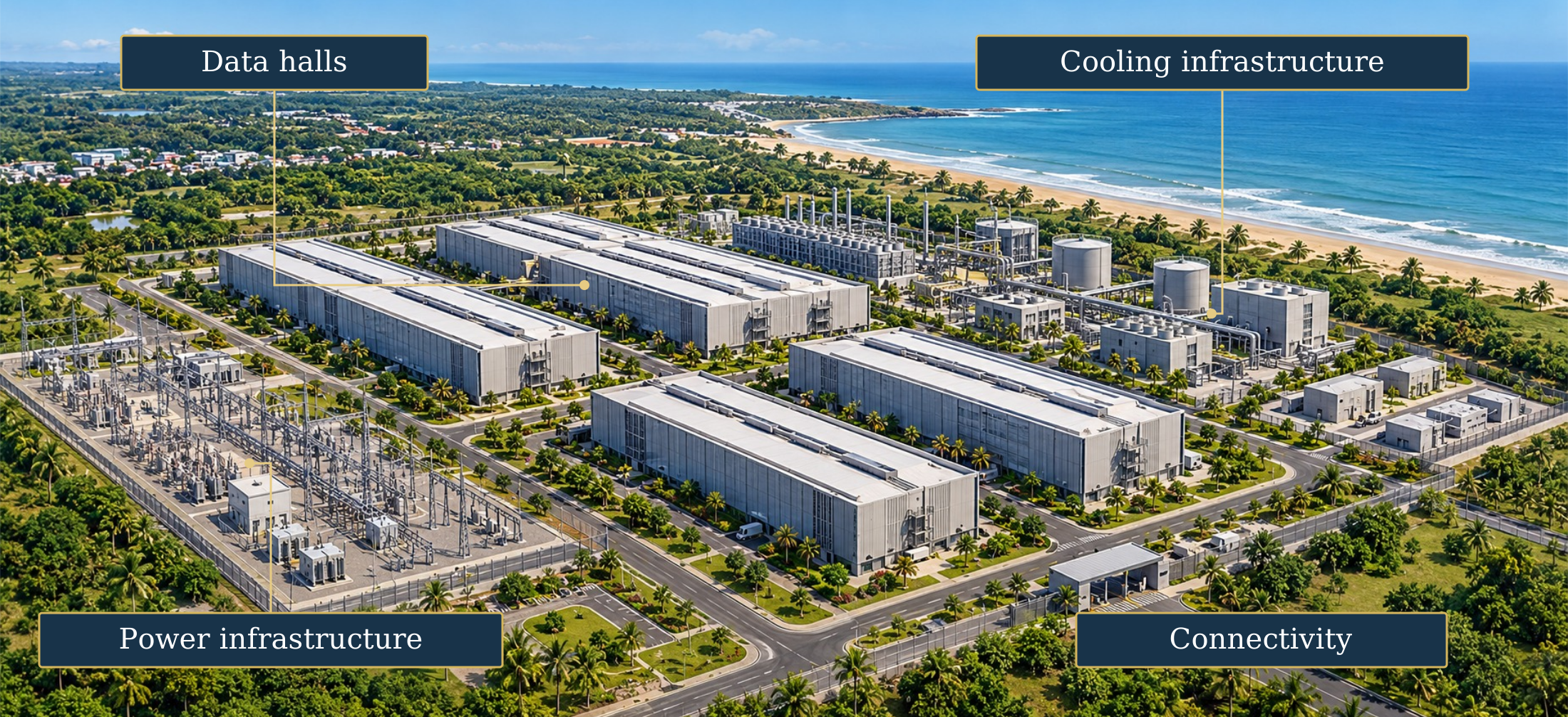
Designed for AI from the ground up, the campus brings together power, liquid cooling, connectivity, security and purpose-built data halls. The computing will come from AI cloud operators, hyperscalers, sovereign AI programmes and enterprises.
Built for AI racks of 120 to 140 kW, liquid cooled, three times a conventional air-cooled rack.
A campus planned for AI from the first drawing
100 MW first, on a site with land to expand in later phases.
Designed around what AI needs, not adapted to it.
THE SETUPURAM ADVANTAGE
An inland 100 MW data centre can use around 2 million litres of freshwater daily, equivalent to the household needs of about 3,800 homes. Setupuram is designed to avoid using potable water for primary cooling.
Seawater absorbs heat through sealed titanium plate heat exchangers. The AI campus uses a separate, closed coolant loop. Heat passes between the circuits, but the water never mixes. Dry coolers provide back-up.
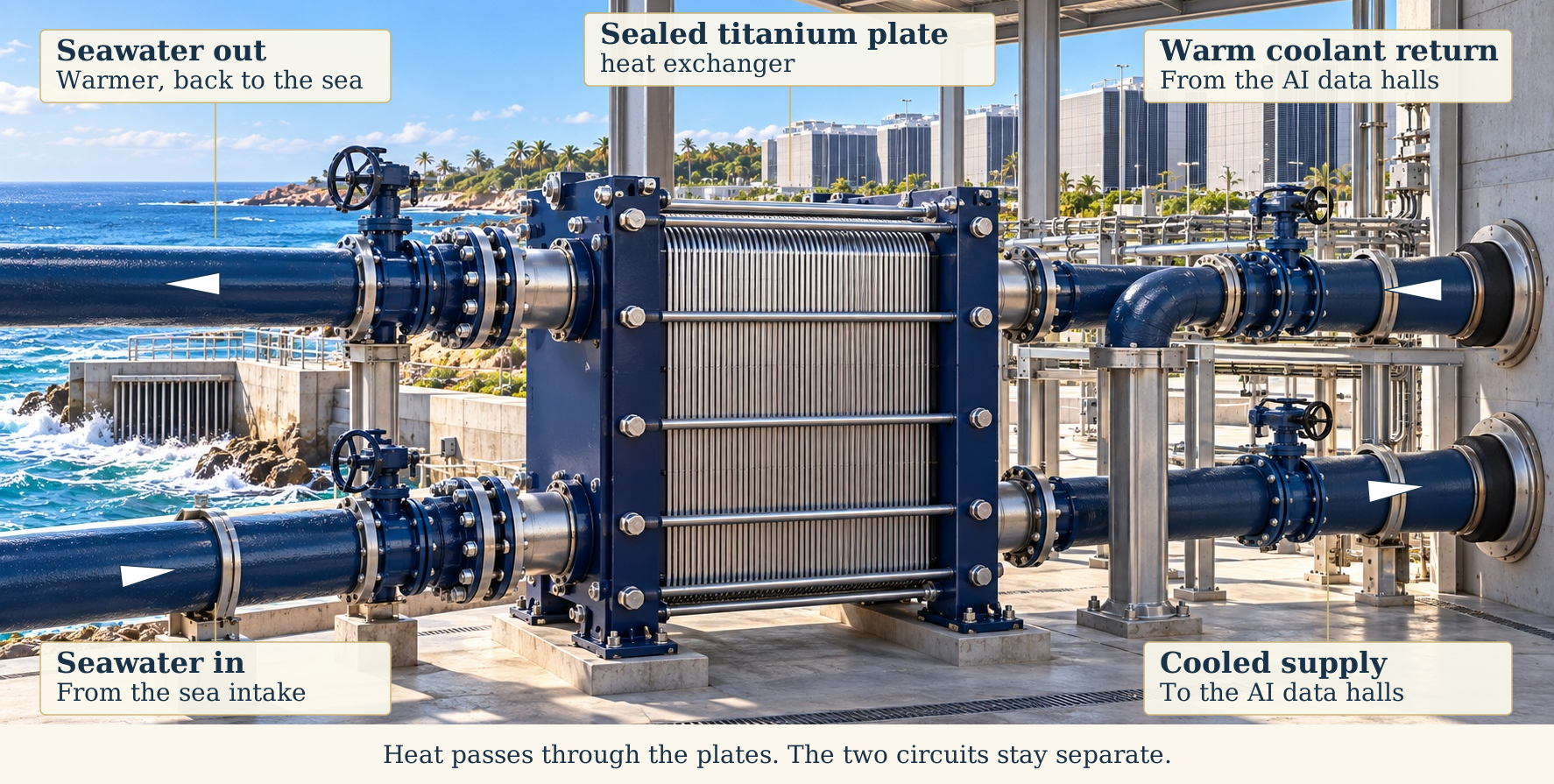
Designed so that no drinking water is used for primary cooling.
Freshwater benchmark: Council on Energy, Environment and Water (CEEW), 17 February 2026. Household norm: CPHEEO, 135 litres per person per day; 2,000,000 ÷ (135 × 3.9 people per household) = about 3,800.
THE CONSORTIUM
A 100 MW AI campus brings together expertise in power, cooling, compute, construction and connectivity. Setupuram Limited contributes the land. Tech Innovations brings the partners together.

Tech Innovations coordinates the consortium, works with the State and project stakeholders, and manages the programme, freeing the partners to focus on their area of expertise.
Setupuram Limited, the founding project partner, contributes 200 acres of contiguous coastal land.
Partners contribute expertise across power, cooling, construction, connectivity, compute, operations and advisory services, working together to deliver the campus from design to full-scale operation.
Each partner brings what it does best. Together, the consortium delivers the campus.

PARTNER AREAS
Partners are invited across eight areas, with multiple opportunities in each.
For example: transformers, subsea cable, coastal survey, inference capacity.
Or choose your area

High-voltage power and energy systems

Seawater and liquid-cooling systems

AI computing infrastructure and cloud capacity

AI platforms, foundation models and enterprise applications

Fibre, networks and subsea connectivity

Planning and building the AI campus

Running the campus and serving compute demand

Governance, expertise and workforce capability
On the form, tick the areas that fit you and choose the opportunities in each. You can add anything not listed.
Register your interestThe next step asks for your email and sends a code, so that we know an enquiry comes from the organisation it names.
If you would rather write to a person, enquiries@techinnovations.ai reaches the same place.
HOW TO JOIN
Organisations interested in partnering are invited to follow three simple steps.

Tell us about your organisation and your area of interest.

We will arrange a confidential discussion to explore fit and opportunities.

Partners will be invited to a data room as discussions progress.
Partners are invited across all eight areas. Early conversations are welcome.

Built together.
Land Owner
 Setupuram Limited
Founding Project Partner
Consortium Lead

Bringing the partners together
Built in India. Connected to the world.


